Attic Ventilation and Insulation Upgrades in Sugar House: The Foundation of Effective Ice Dam Prevention
Attic Ventilation and Insulation Upgrades in Sugar House: The Foundation of Effective Ice Dam Prevention
Every ice dam prevention strategy — heat tape, heated gutters, drainage paths — addresses the symptom. Attic ventilation and insulation upgrades address the cause. In Sugar House, where the housing stock is predominantly pre-1970 craftsman bungalows and older homes with original attic conditions, inadequate insulation and blocked ventilation are the single biggest driver of ice dam formation every winter.
Understanding why attics cause ice dams — and how to fix them properly — is essential knowledge for any Sugar House homeowner who wants lasting protection from the freeze-thaw cycles that define Salt Lake Valley winters.
Why Attic Conditions Drive Ice Dam Formation in Sugar House
The physics of ice dam formation are simple: when your attic is too warm, the roof deck above it warms up, melting snow from the underside. That meltwater runs down the roof and refreezes when it reaches the cold eave overhang — the part of the roof that extends beyond the heated building envelope. The larger the temperature differential between the middle of your roof and the eave edge, the more aggressively ice dams form.
On Sugar House’s older homes, the attic is often warm for two compounding reasons:
1. Insufficient insulation R-value
Utah’s climate zone (Zone 5–6) calls for attic insulation of R-38 to R-49. Many pre-1970 Sugar House homes have R-11 to R-19 — the minimum standard from their original construction era. This under-insulation allows significant heat to escape through the roof deck.
2. Blocked or inadequate ventilation
Proper attic ventilation requires a balanced pathway for cold outside air to enter at the soffits and exit at the ridge — keeping the roof deck cold and uniform. In older Sugar House homes, soffit vents are frequently blocked by added insulation, and ridge vents are often absent. The result is a stagnant warm attic with no mechanism to purge heat.
What an Attic Upgrade Involves
Insulation Assessment
We measure your current insulation R-value using a calibrated probe and compare it to Utah’s recommended minimums. We also identify any areas where insulation has shifted, settled, or been disturbed by previous contractors.
Soffit Vent Clearing and Baffle Installation
We clear blocked soffit vents and install polystyrene baffles (also called rafter baffles or vent chutes) between every rafter bay to maintain a clear airway from the soffit to the ridge — even after new insulation is added above.
Ridge Vent Assessment or Installation
If your Sugar House home lacks a functional ridge vent, we can install a continuous shingle-over ridge vent that integrates with your existing roofline with no visible change to the home’s appearance.
Insulation Upgrade
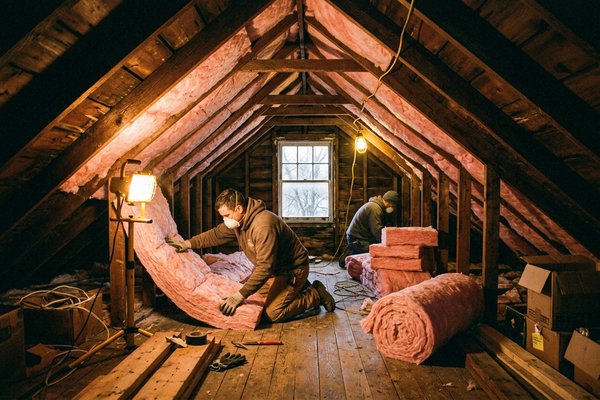
We add blown cellulose or fiberglass insulation over the existing layer to bring the attic to the recommended R-value for your Utah climate zone. Blown insulation conforms to the attic geometry and achieves consistent depth across the entire floor — eliminating cold spots that drive uneven snow melt.
R-Value Targets for Sugar House Homes
| Current R-Value | Recommended Target | Upgrade Type | Estimated Cost |
|---|---|---|---|
| R-11 or below | R-49 | Full blown insulation install | $2,500–$4,500 |
| R-19 | R-49 | Supplemental blown top-up | $1,200–$2,500 |
| R-30 | R-38–49 | Light top-up | $600–$1,200 |
| R-38+ | Maintain | Annual inspection only | $150–$250 |
The Combined Effect: Insulation + Ventilation + Heat Tape
An attic upgrade alone significantly reduces ice dam risk — but the most effective system combines all three components:
- Attic insulation upgrade → reduces heat escaping through the roof deck
- Ventilation correction → keeps the roof deck cold and uniform from ridge to eave
- Heat cable at eaves → provides active protection in the remaining cold eave zone
Homeowners who install all three components consistently report elimination of ice dam formation — not just reduction. For Sugar House’s older homes where repeat damage has been a seasonal pattern, this whole-system approach is the only permanent solution.
Frequently Asked Questions
How do I know if my Sugar House attic needs an insulation upgrade?
The most reliable indicator is ice dam history — if you have had ice dams in previous winters, your attic is almost certainly under-insulated or poorly ventilated. Other signs include unusually high heating bills, uneven snow melt visible from the street (bare patches on the upper roof), or frost visible on roof deck boards when you inspect the attic in winter.
Can attic insulation upgrades be combined with heat tape installation in Sugar House?
Yes — and we recommend combining them. Installing heat tape before addressing the attic means the cable is compensating for a problem that could be reduced significantly at the source. Completing the attic upgrade first, then installing heat tape as a secondary layer, produces the best overall outcome at the lowest total energy cost.
Will an attic insulation upgrade affect my home’s ventilation or cause moisture problems in Sugar House?
When done correctly — with proper baffle installation and balanced soffit-to-ridge airflow — attic insulation upgrades improve moisture management, not worsen it. The key is maintaining the ventilation pathway above the insulation. Heat Tape Roofing installs baffles in every rafter bay before adding insulation to ensure this airway is preserved.
Fix the Cause, Not Just the Symptom
Attic ventilation and insulation upgrades are not glamorous — but they are the most cost-effective action a Sugar House homeowner can take to reduce ice dam risk, lower heating bills, and extend the life of their roof. Combined with professional heat tape installation, they provide the complete, lasting protection that Sugar House’s historic homes deserve.
Get your Sugar House attic assessment and ice dam prevention plan at sugarhouseheattape.com
