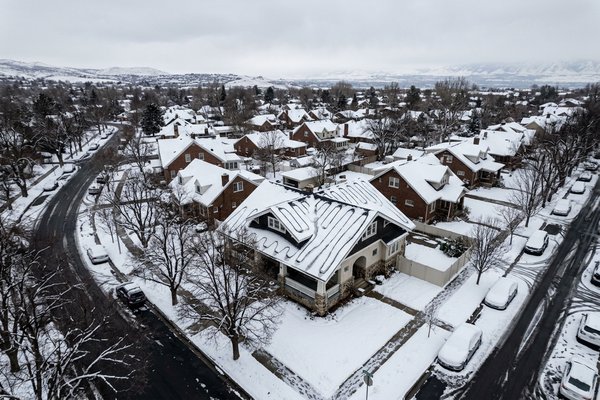
Complete Ice Dam Protection in Sugar House: How Salt Lake Valley Homeowners Can Stop Winter Damage for Good
Complete Ice Dam Protection in Sugar House: How Salt Lake Valley Homeowners Can Stop Winter Damage for Good
Ice dams are the number-one cause of winter roof damage in Sugar House. They form when heat escaping from your living space warms the upper section of your roof, melting snow that then refreezes at the cold eaves — building up a ridge of ice that traps meltwater and forces it backward under your shingles. On older craftsman bungalows in the Sugar House neighbourhood, where attic insulation is often inadequate and eaves are wide, ice dams can form after a single overnight freeze-thaw cycle.
A truly complete ice dam protection system goes beyond just laying cable on the roof. Heat Tape Roofing takes a whole-system approach — combining self-regulating heat tape with targeted attic ventilation upgrades and precisely routed snow-melt drainage paths — so water drains safely even during the most aggressive Salt Lake Valley winter conditions.
The Three-Layer Approach to Complete Ice Dam Protection
Layer 1 — Attic Thermal Control
The root cause of most ice dams is an insufficiently insulated or poorly ventilated attic. Warm air rises from your living space, heats the roof deck, and melts snow from below. Proper attic insulation and ridge/soffit ventilation keeps the roof deck cold and uniform, reducing the temperature differential that creates ice dams in the first place.
In Sugar House’s older housing stock, we commonly find attics that are under-insulated (R-19 or below, when R-38 to R-49 is recommended for Utah) and with blocked soffit vents from decades of added insulation. Correcting these issues is the foundation of any lasting protection.
Layer 2 — Self-Regulating Heat Cable
Even with a well-insulated attic, Salt Lake Valley freeze-thaw cycles can still create ice dam conditions along overhanging eaves where the roof extends beyond the warm building envelope. Heat cable installed along eaves, valleys, and in gutters creates active melt channels that drain water safely even when temperatures hover around freezing.
Commercial-grade self-regulating cable automatically increases output as temperatures drop and reduces output as they rise — drawing power only when needed and protecting against overheating.
Layer 3 — Engineered Drainage Paths
Neither insulation nor cable alone is sufficient if there is nowhere for the meltwater to go. We design and install targeted snow-melt drainage paths — routing heat cable through gutters and downspouts so that water melted by the cable above can travel freely to the ground without refreezing partway down the system.
How Sugar House’s Climate Drives Ice Dam Risk
| Climate Factor | Sugar House Impact |
|---|---|
| Average winter low (Dec–Feb) | 22–28°F — right in the freeze-thaw danger zone |
| Annual snowfall | 55–65 inches in the Salt Lake Valley |
| Freeze-thaw cycles per season | 15–30+ on typical years |
| Typical eave overhang (older homes) | 18–24 inches — well beyond the warm zone |
| Roof pitch (craftsman bungalows) | 4:12 to 6:12 — moderate, allows snow accumulation |
This combination of repeated moderate snowfall and frequent crossing of the freezing point makes Sugar House one of the highest ice dam risk zones along the Wasatch Front.
What Complete Ice Dam Protection Costs in Sugar House
A whole-system approach typically involves multiple components:
- Attic insulation upgrade: $1,500–$4,000 depending on attic size and current R-value
- Attic ventilation correction: $500–$1,500
- Heat cable installation (eaves, valleys, gutters): $2,200–$7,500
- Combined project discount: 15–25% savings when work is done together
Total complete system range: $3,500–$12,000 for most Sugar House homes. This investment typically pays for itself after preventing just one major ice dam event, which averages $6,000–$20,000 in interior damage.
Frequently Asked Questions
Does heat tape alone provide complete ice dam protection in Sugar House?
Heat tape is highly effective at creating melt channels and preventing dangerous ice buildup at eaves and gutters. For maximum protection on older Sugar House homes, combining heat tape with attic insulation and ventilation upgrades eliminates both the symptom (ice) and the root cause (heat loss through the roof deck).
How quickly can a complete ice dam protection system be installed?
For most Sugar House homes, the full three-layer system can be installed in 3–7 days. We coordinate all trades — insulation, ventilation, and heat cable — to minimise disruption and reduce combined labour costs by 15–25%.
Will a complete ice dam protection system work on my historic Sugar House bungalow?
Yes. We specialise in historic and older homes throughout Sugar House. Our concealed Hidden Heat aluminium panel option and low-profile cable clip systems comply with HOA and historic review requirements while providing full protection.
The Bottom Line for Sugar House Homeowners
A complete ice dam protection system is the only permanent solution to a problem that costs Salt Lake Valley homeowners millions every winter. Heat Tape Roofing designs every system from scratch for your specific home — accounting for your roof geometry, attic condition, eave length, and aesthetic requirements.
Request your free complete ice dam protection assessment at sugarhouseheattape.com
