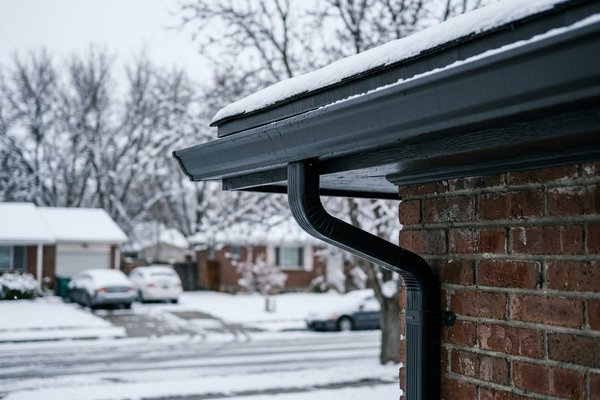
Heated Gutters and Downspouts in Sugar House: Why Utah Homes on Tree-Lined Streets Need Them Every Winter
Heated Gutters and Downspouts in Sugar House: Why Utah Homes on Tree-Lined Streets Need Them Every Winter
For homeowners on Sugar House’s beautiful tree-lined streets, gutters are a year-round concern — but winter turns them into a critical weak point. Leaves and debris from mature maples and oaks accumulate through autumn, and when the first freeze arrives, that organic matter traps moisture and accelerates ice formation inside gutters and downspouts. Once a downspout freezes solid, there is nowhere for roof meltwater to go — and it backs up under shingles, into fascia boards, and eventually through your ceilings.
Heated gutters and downspouts eliminate this problem entirely. Heat Tape Roofing installs professional heat tape inside gutters and advanced de-icing systems in downspouts so snowmelt flows freely throughout the Salt Lake Valley winter — no matter how low temperatures drop or how much debris has accumulated.
Why Standard Gutters Fail in Sugar House Winters
Standard aluminium gutters are designed for rain, not the specific conditions of a Utah freeze-thaw winter. Three factors make Sugar House gutters particularly vulnerable:
1. Repeated freeze-thaw cycling
Salt Lake Valley temperatures commonly cross the 32°F threshold 15–30 times per winter season. Each cycle expands and contracts any water inside the gutter — a process that cracks seams, pulls hangers loose, and creates gaps where water infiltrates the fascia.
2. Tree debris on tree-lined streets
Sugar House’s mature urban tree canopy — one of its defining characteristics — means gutters accumulate significant organic debris that traditional cleaning cannot fully address before winter. This debris acts as a sponge, holding moisture and accelerating ice formation.
3. Wide eave overhangs on older homes
Craftsman bungalows typically have 18–24 inch eave overhangs. These overhangs are cold — well beyond the heated building envelope — meaning any water reaching the gutter has already passed through a freezing zone.
How Gutter and Downspout Heating Works
Gutter Heat Cable
We route self-regulating heat cable inside the gutter channel along its entire length. The cable rests on the bottom of the gutter and maintains a temperature above freezing along the full drainage path. Because it is self-regulating, it only draws full power during the coldest periods and reduces output automatically as temperatures rise.
Downspout Heating
A separate cable drop is installed inside each downspout from top to bottom. This is the critical link that most DIY installations miss — without a heated downspout, meltwater from the gutter reaches the top of the frozen downspout and has nowhere to go.
Drip Edge and Eave Transition
We also install cable at the drip edge — the transition point between the roof surface and the gutter — to prevent ice from bridging this joint and creating a dam that overtops the gutter entirely.
Heated vs. Unheated Gutters: The Cost of Not Acting
| Scenario | Unheated Gutters | Heated Gutters |
|---|---|---|
| Average freeze-thaw cycles/season | 15–30 | 15–30 |
| Gutter ice risk | High — clogs within 1–2 freeze events | Eliminated |
| Downspout freeze risk | Very high on tree-lined streets | Eliminated |
| Ice dam risk from gutter overflow | High | Minimal |
| Gutter lifespan | 10–15 years with freeze damage | 20–25 years protected |
| Repair costs per incident | $300–$1,500 | $0 |
| Emergency interior leak risk | High | Very low |
What Does Heated Gutter Installation Cost in Sugar House?
For a typical Sugar House craftsman home, heated gutter and downspout installation runs $800–$2,500 depending on linear footage and number of downspouts. When combined with eave heat cable installation, the overall project cost is reduced by 15–20% due to shared labour and electrical work.
Most homeowners recover this investment within one to two winters by avoiding frozen gutter repairs, fascia replacement, and the ice dam damage that commonly follows gutter failure.
Frequently Asked Questions
Can heat cable be added to my existing gutters in Sugar House without replacing them?
Yes. In most cases, heat cable can be routed inside your existing gutters and downspouts without any modifications or replacements. This is a major advantage for homeowners who have recently replaced gutters or who want to avoid the disruption and cost of a full gutter upgrade.
Will heated gutters work during Sugar House’s worst cold snaps?
Yes. Commercial-grade self-regulating cable used by Heat Tape Roofing is rated to -40°F and automatically increases its heat output as temperatures fall. During Utah’s coldest periods, the system works hardest — exactly when you need it most.
How do I know if my downspouts are frozen in Sugar House?
Common signs include icicles forming at the bottom of the downspout, water overflowing at the top of the downspout, or visible ice visible through any clear sections. In severe cases, you may hear cracking or notice the downspout pulling away from the fascia due to ice expansion.
Keep Your Sugar House Gutters Flowing All Winter
Heated gutters and downspouts are a simple, lasting solution to one of Sugar House’s most common winter maintenance problems. With professional installation from Heat Tape Roofing, your drainage system stays clear, your fascia stays dry, and your historic home stays protected through every freeze-thaw cycle Salt Lake Valley winters bring.
Get your free heated gutter installation quote at sugarhouseheattape.com
